
Listings live inside a search widget, not a page
A buyer searching an address by name never finds the listing, because the widget is invisible to search engines.
Live listing lifecycle, not a static brochure
A managed, custom-coded website for brokerages and real estate teams: a page for every listing and every market, live in 7 days, 90+ PageSpeed, weekly detail updates, researched articles and Cloudflare hosting included, from one monthly fee.
Live in 7 days on Listing Desk. $797 build fee invoiced only after launch.
90+
PageSpeed guaranteed
7 days
Live on Listing Desk
5 a month
Revisions included
$137
Plans start from
Built for every kind of inventory
A residential brokerage website earns its keep by giving every active listing its own indexable page and every agent their own roster page, instead of hiding inventory behind a single search widget.
See the buildA real estate team website works when every member of the team has a real profile and a real slice of the site's traffic, rather than the whole site pointing back to the team lead alone.
See the buildA property management company website works when rental units and any sales listings are structured differently from the start, because a renter and a buyer are searching for different things and expect different pages.
See the buildA new construction website needs pages built around communities and phases, where unit availability changes constantly and every unit shares specs with dozens of others rather than being one-of-a-kind.
See the buildA commercial real estate website works when a listing page carries square footage, zoning, lease type and cap rate fields that a residential template was never built to show.
See the buildA multi-office brokerage website works when each office has its own page, its own agent roster and its own local listings, sitting inside one consistent brand rather than one office dominating the homepage.
See the buildDrag or scroll sideways for the rest
Five problems repeat across brokerage and team sites we take over, each with a real cost attached.
A buyer searching an address by name never finds the listing, because the widget is invisible to search engines.
A listing goes under offer on the MLS and stays "active" on the website until someone remembers to edit the page.
New agents get a headshot and a sentence, with no listings, no bio and no lead flow of their own.
Nobody owns the follow-up, so a listing enquiry sits unread while the agent it belongs to never sees it.
A single "service area" sentence gives search engines nothing to rank for a specific city or neighborhood search.
No plugin fixes a structural problem. These are structural fixes, built into the page templates themselves.
Listings live inside a search widget
Every listing renders as its own indexable page
Status lags the MLS by days
The lifecycle board follows your feed automatically
The roster stops at the founder
Every agent gets a real profile page and their own listings
Enquiries land in one shared inbox
Enquiries route to the agent or office that owns the page
No page for your actual markets
One page per city, town or neighborhood you name
These are the outcomes the structure is built to produce, described in plain terms rather than a percentage nobody can verify.
Every listing and market gets its own indexable page, so search engines have something real to rank for each one.
Routing tags every form with the agent or office it belongs to.
Coming-soon, active, under-offer and sold pages update from your feed.
Add a tenth agent or a fiftieth without a redesign.
A 30-minute demo on a video call, on a build close to your brokerage's size, in about your colors.
The same six changes show up on almost every brokerage site we take over.
Signature to ListingWebStudio
A listing page is not one static template. It changes what it shows and what it asks a visitor to do based on where the listing actually is, pulled straight from your feed, and a real brokerage tracks several of these at once.
One monthly fee covers the site, the tool that runs it, the domain and the hosting. Nothing here is an add-on line item.
Every listing, market, roster and agent page, custom coded around your feed.
Status-aware pages that follow your feed automatically.
Registered in your name for as long as your plan is active, or we point your own.
SSL, CDN, DDoS protection and unmetered bandwidth, nothing itemized.
Routed by API, Zapier or Make into whatever your team already uses.
Weekly detail updates and a person you can reach, not a login you have to remember.
Every feature below is a real part of the service, not a category name. Each one links to what it does, the problem it removes and what you have to do about it, which is usually nothing.
Listing Desk
The whole website and the work that keeps it running, on every plan.
Brokerage Floor
Everything above, plus the AI Engine answering when your agents cannot.
Portfolio Scale
Everything above, plus the Content Engine producing the marketing.
Messaging and call usage on Brokerage Floor is passed through at what our providers charge us. Everything else on every plan is inside the monthly fee.
If you run Google Ads for listings, open houses or seller leads, the page the click lands on is part of what the click costs. This is the mechanism, in plain terms, with no percentage attached to it.
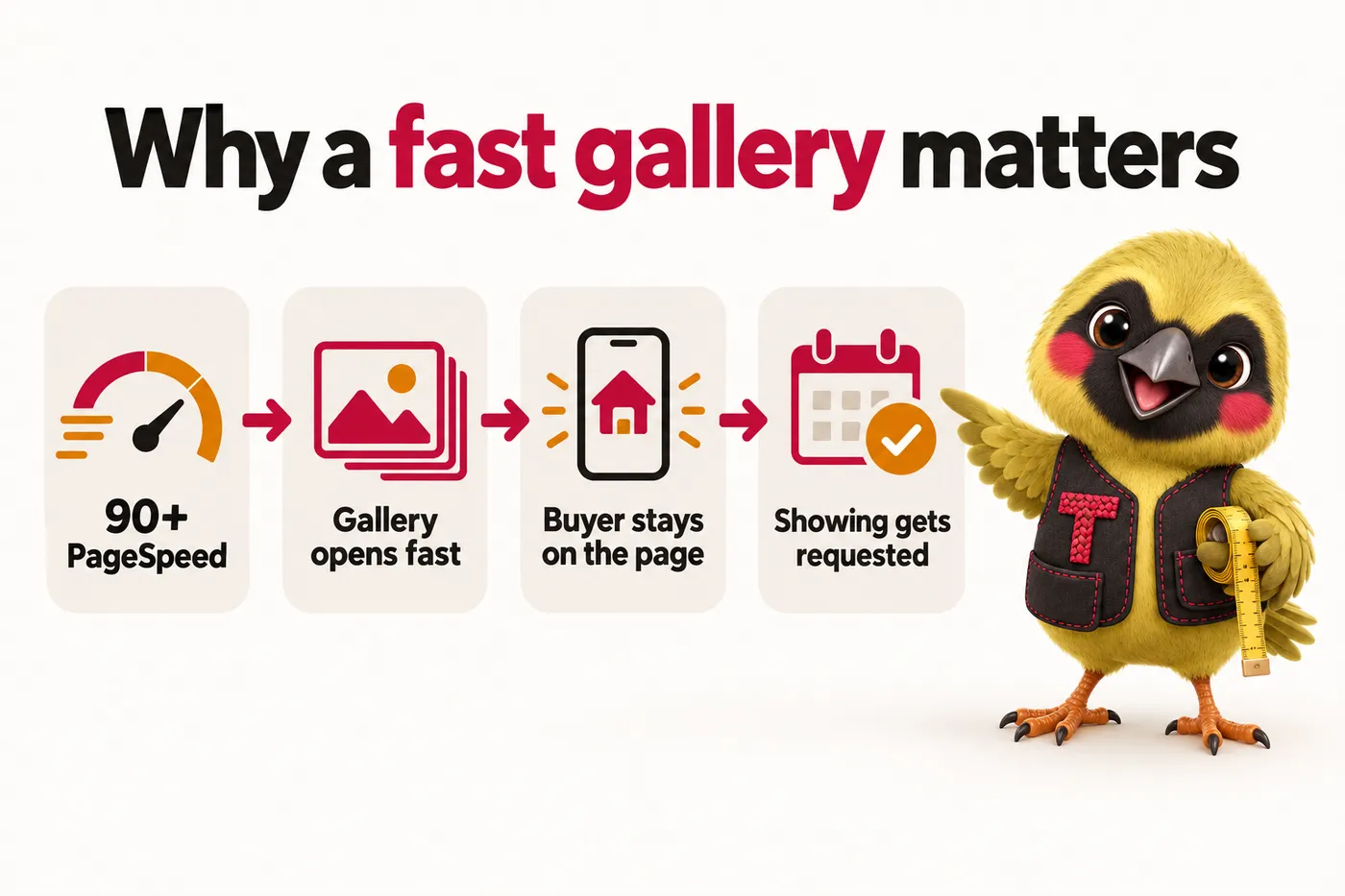
Custom-coded pages from the edge with every listing photo resized for the device, built to hold 90+ PageSpeed with a full gallery on it.
A visitor who taps your ad and waits is a visitor you have already paid for. Landing them on the listing or market page they asked for, not a slow homepage, is the cheapest improvement available to you.
Google Ads assesses landing page experience as part of its ad quality scoring, so a faster and more relevant page can lower what you pay for the same click rather than raising it.
What we will not do is promise you a cost-per-click drop, a percentage or a ranking. Those depend on your auction, your budget and your competitors. What we can promise is the page: fast, relevant to the search that produced the click, and built to keep the visitor there.
Source: Google Ads Help, About landing page experience, accessed September 2026. Core Web Vitals thresholds: web.dev, Web Vitals, accessed September 2026.
A slow listing gallery loses the buyer who was about to request a showing, and it costs you in search ranking on every page that carries it. Every page here is built to hold 90+ PageSpeed from the day it launches, listing photos and all.
Edge-served pagesRendered ahead of time and cached on Cloudflare's network worldwide.
Resized listing photosDelivered at the resolution each visitor's screen needs, not full size every time.
Ranking window
Local search visibility typically moves within 3 to 5 months of launch.
This is a window, not a promise of a specific position. It depends on how competitive your markets are.
Search results, answer boxes, AI assistants and the structured data underneath all three. Here is what each one means for a brokerage, and what arrives as part of the build.
SEO
Technical SEO (crawlable structure, clean URLs, correct canonicals, fast pages, accurate sitemaps) and on-page SEO (one H1, unique titles and descriptions, real internal links, alt text on listing photos). On top of that: a market or service-area page for each city, town and neighborhood you actually cover, which is where local organic traffic comes from.
AEO
Answer-first paragraphs under question-shaped headings, and a visible FAQ block on every significant page, marked up so it can be lifted into featured snippets and voice answers.
GEO
An llms.txt and llms-full.txt describing the business, consistent entity naming everywhere, facts stated plainly with dates, and AI crawlers left explicitly allowed. Assistants such as ChatGPT, Claude, Perplexity and Google AI Overviews summarise rather than list, so being quotable is the job. Nobody can guarantee an appearance, and we do not.
Schema
Organization, Service, FAQPage and BreadcrumbList markup generated from the page's own data, plus listing markup where your feed supports it. Review markup is added only once you have real, attributable reviews, because marking up anything else risks a manual action.
How search visibility is built for a brokerageLocal SEO for the markets you cover
Every US state, remotely
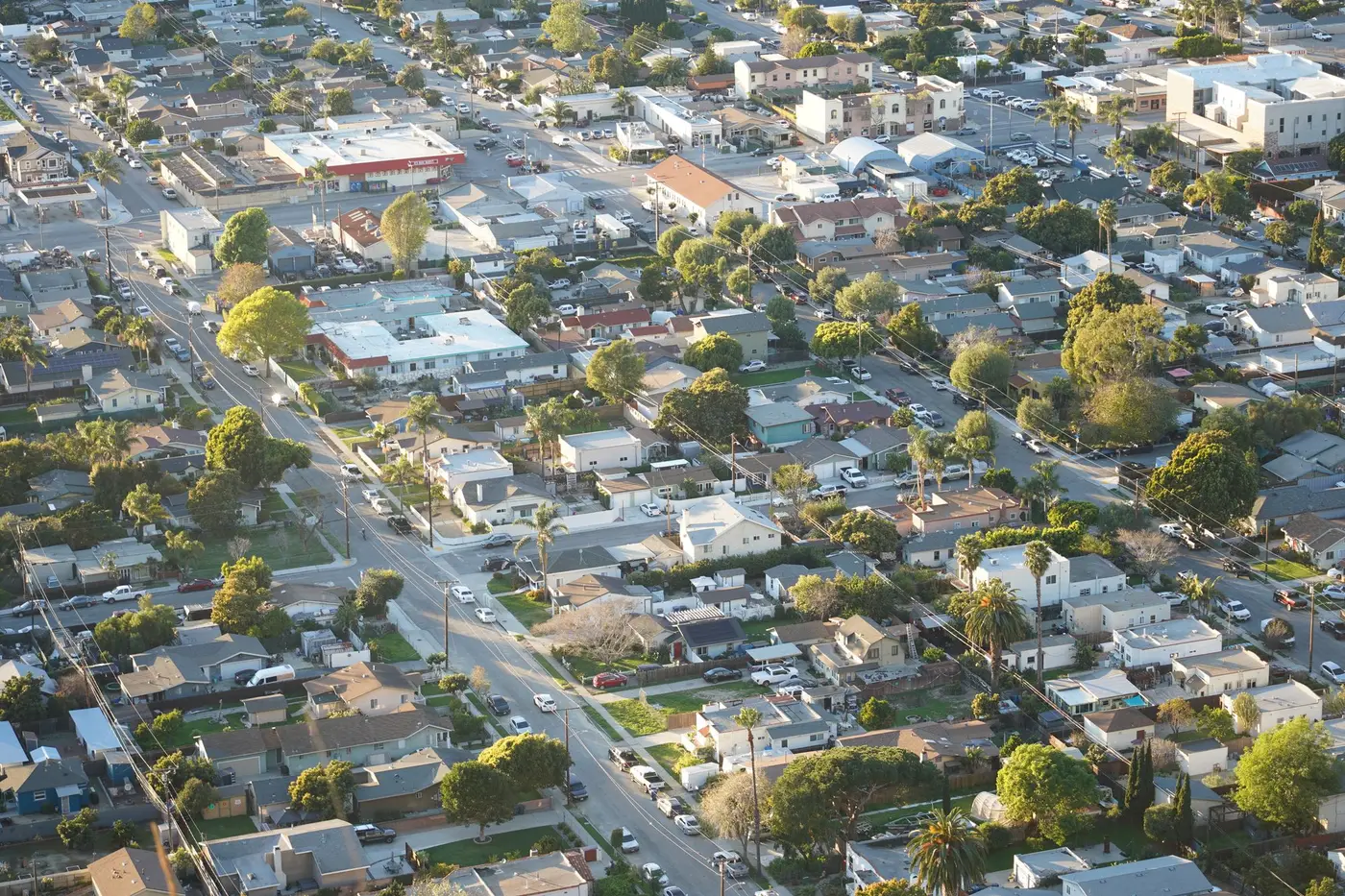
We work remotely with brokerages and real estate teams across the country, including brokerages in Texas, Florida, California, New York and Illinois. We work remotely with brokerages across the country, so where your offices sit changes the market pages we build, not the plan or the price.
A page per market you nameCities, towns and named neighborhoods your listings actually fall in, with live counts from your feed.
A page per officeMulti-office and franchise brokerages get an office page each, with its own address, roster and listings.
Hubs, so pages do not competeA large metro gets a hub page linking to its neighborhoods, which keeps fifty market pages from cannibalising each other.
Brokerages we build for operate in
Named as examples, not as a limit: the markets on your site are the ones you name at onboarding, and your time zone changes nothing about the plan or the price.
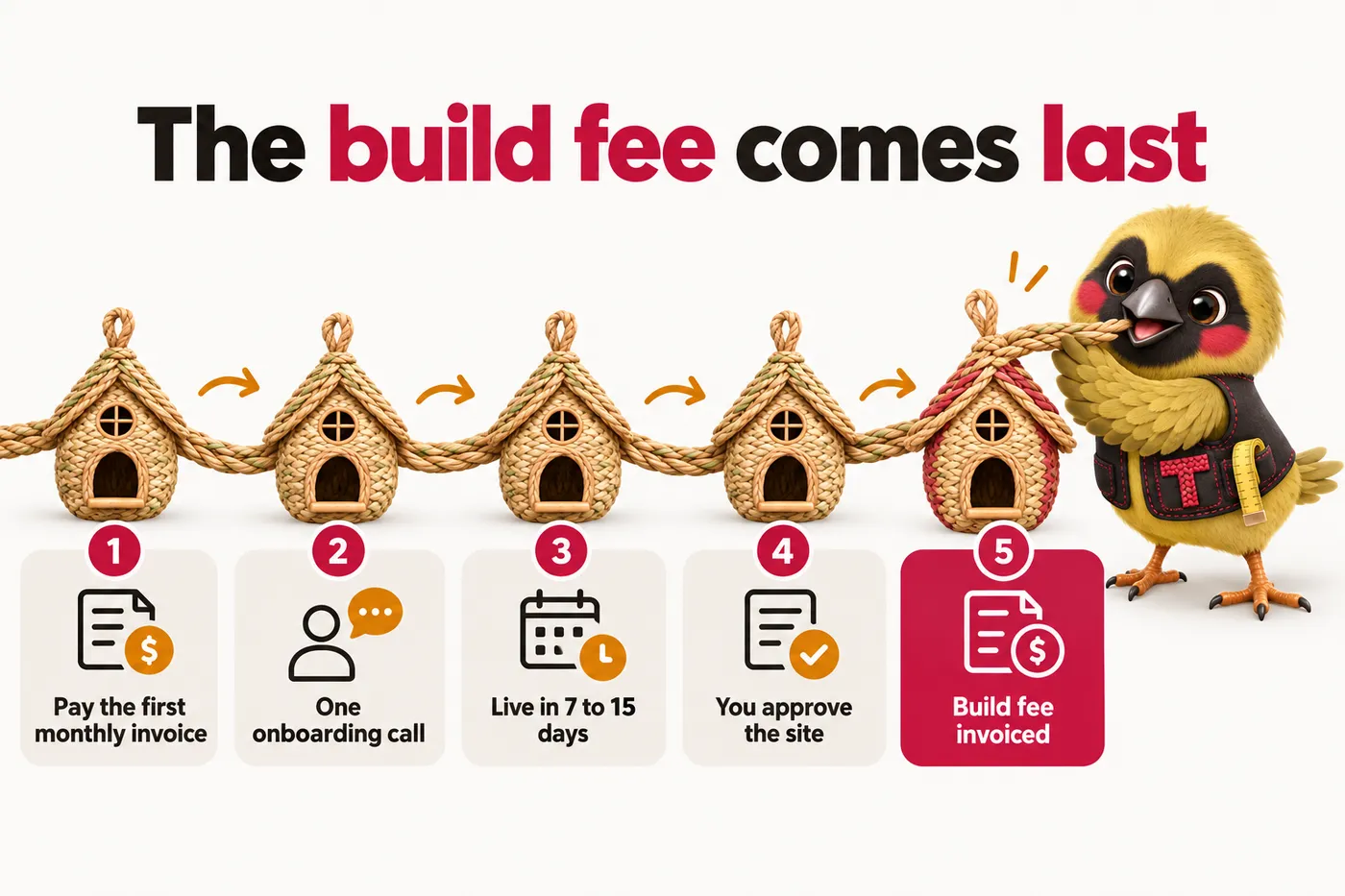
How market pages are builtThe build fee is the last thing charged, not the first, and it is only charged after you have signed off on the site.
That starts the plan. The build fee is not charged yet.
We walk through your roster, feed and markets, and agree the launch date.
Live in 7 days on Listing Desk, 10 on Brokerage Floor, 15 on Portfolio Scale.
Only once you have approved the finished site.
The terms that matter before you buy, with the conditions in the open rather than in a policy page you have to go looking for.
Not up front, and only once the site is live and you have approved it. You start by paying the first monthly invoice, nothing else.
On listing pages with full galleries, not only on the homepage. If a page we built falls below it, fixing it is our job, not a revision you spend.
5 a month, any size, then a flat fee each. No hourly billing anywhere on the account, ever.
Month to month. Your domain is registered in your name and transfers on request at no charge, and your content comes with you.
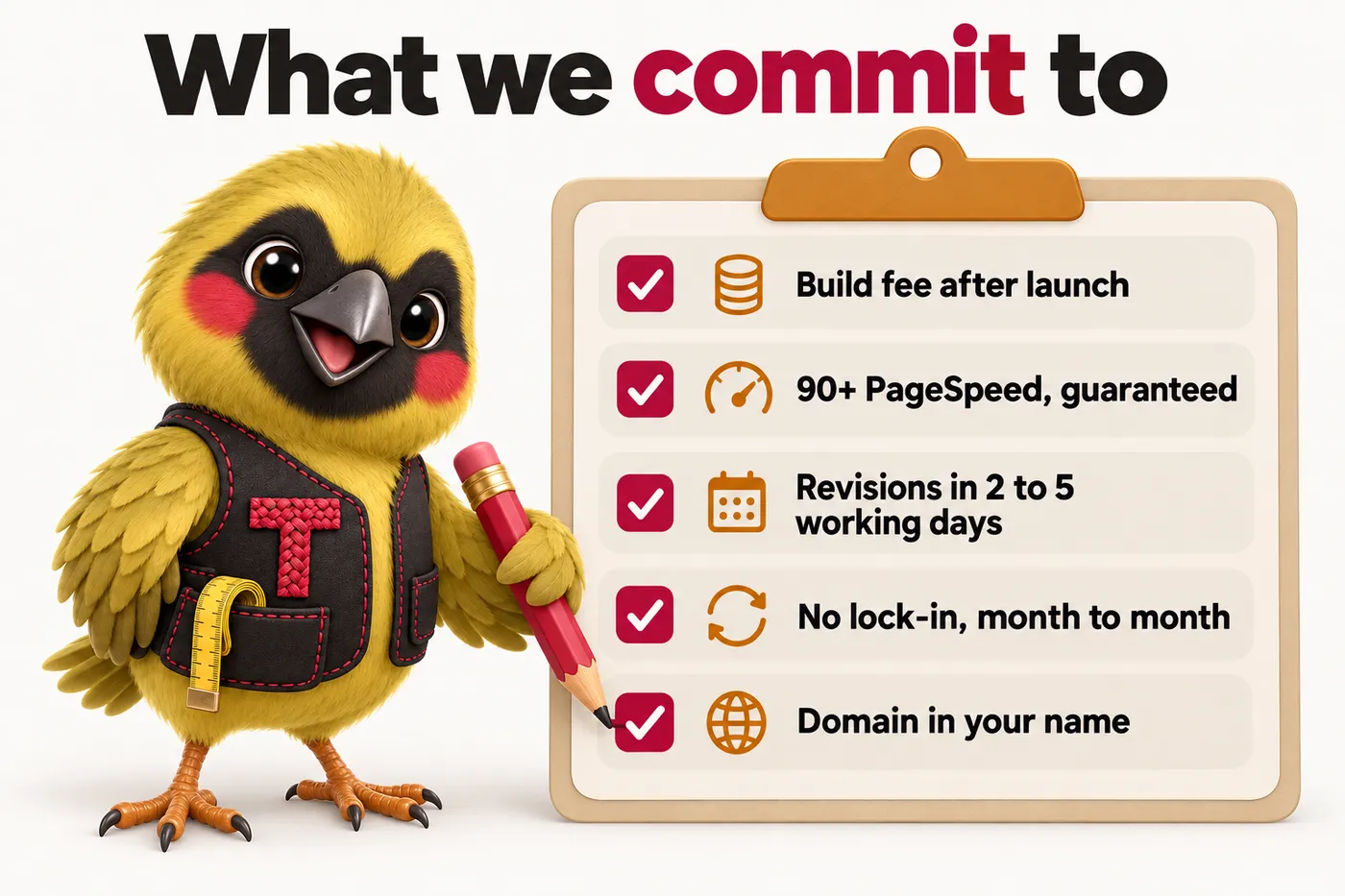
Cancelling takes one email, at least 2 business days before your next invoice date during business hours. With valid notice no further invoice is raised and your site runs to the end of the month you have paid for. Live in 7 days on Listing Desk.
Every plan includes the full listing lifecycle board, market pages, agent roster pages and managed hosting. See the full breakdown on the pricing page.
Listing Desk
The website, fully managed
$137 / month
Plus $797 build fee, invoiced after launch
Brokerage Floor
Everything, plus the AI Engine
$297 / month + usage
Plus $797 build fee, invoiced after launch
Portfolio Scale
Everything, plus the Content Engine
$747 / month
Plus $797 build fee, invoiced after launch
Real quotes from the coordinators, administrators and managers who handle the inquiries every day. Business names are left out on purpose; each quote names the person, their role, the business type and the city.
Inquiry form and response workflow for listing inquiry routing
We expected a prettier website; what we actually use every day is the new form. The form gathers listing reference, buyer question and contact preference at the start, exactly the details our follow-up messages always requested. We answer properly on the first reply far more often than we used to.
Mobile navigation and page layout for listing inquiry routing
We reviewed the draft on phones rather than a big screen, deliberately. The important details sit near the top and the inquiry button is impossible to miss. Sending the link by text during a call finally works the way it should.
FAQ research and editorial review for listing inquiry routing
The starting point was our own sent mail, not a template, and it shows. They identified which questions belonged on the site and we checked every answer before launch. I now share a link instead of digging through the outbox.
Submission acknowledgment and follow-up for listing inquiry routing
People used to call just to check their listing inquiry routing form had actually gone through. Submitters now see exactly what we will do with their request and when to expect us. It is a small corner of the site that makes the whole process feel finished.
Preparation guide and inquiry support for listing inquiry routing
I was skeptical that a guide would change much for listing inquiry routing. I was wrong. It tells people what to have ready before we speak, without demanding everything up front. We include it in our first response as standard.
Service scope and expectations for listing inquiry routing
We took the wording about listing inquiry routing seriously, and I am glad we did. The page describes the process faithfully and leaves the judgment calls to a conversation with our team. We no longer open every call by correcting the website.
Inquiry assignment and staff handover for listing inquiry routing
The question 'who is answering this one?' used to hang over every listing inquiry. Ownership is visible now, and cover no longer requires reading someone's entire inbox. Vacation cover stopped being an archaeological exercise.
Structured reference pages for listing inquiry routing
Converting our listing inquiry routing attachment into proper pages was overdue. I can send the exact section someone needs, and they can read it without downloading anything. The print-friendly version remains, but it is no longer the only option.
Content audit and update process for listing inquiry routing
They tracked down every place our listing inquiry routing information appeared; there were more than we admitted. The facts have one home, and every change request names the reference page and its reviewer. Maintaining the site finally feels manageable.
Inquiry categories and guided navigation for listing inquiry routing
The idea that visitors could sort themselves before writing seemed obvious only in hindsight. New business and existing conversations now arrive under different subjects. Returning customers no longer repeat the whole form to ask one question.
Location information and contact routing for listing inquiry routing
We have more than one contact point, and the old listing inquiry routing page never said which applied where. The location travels with the inquiry now, so we stop asking people where they meant to reach. Simpler for visitors, and much simpler for whoever covers the phone.
Reference content and service presentation for listing inquiry routing
We asked for substance over slogans on the listing inquiry routing page, and that is what we got. Everything published is material we reviewed ourselves, chosen because it answers a real question. People comment on it, which never happened with the old page.
After-hours inquiry capture for listing inquiry routing
The after-hours side of listing inquiry routing was an afterthought on the old site. People leave the relevant details and see plainly when to expect a reply. Mornings start with a proper queue rather than voicemail archaeology.
Form usability and error handling for listing inquiry routing
The old listing inquiry routing form lost people at the error message; we knew because they told us. It points at exactly what needs fixing and preserves everything else. Staff demonstrating the form to a customer no longer have to apologize for it.
Page migration and redirect mapping for listing inquiry routing
My worry was the listing inquiry routing page we had linked from years of emails. They inventoried the old addresses and walked us through where each one would redirect. I could share the new site knowing the old links had been taken seriously.
Content approvals and change requests for listing inquiry routing
Updating listing inquiry routing content used to mean describing a change by phone and hoping. Approval and publication both refer to the same recorded version now. The follow-up email chains that used to accompany every edit have gone.
Returning-customer contact path for listing inquiry routing
Existing customers asking about listing inquiry routing had no front door of their own. The two message types arrive under different subjects, so the sorting is done for us. We answer the question now instead of playing archivist first.
Basic inquiry source reporting for listing inquiry routing
We have only just started collecting this data for listing inquiry routing, and it has already changed our reviews. Submissions carry their originating page, so content and inquiries can finally be compared. Content decisions now start from evidence rather than impressions.
Contact resilience and delivery checks for listing inquiry routing
The scenario I cared about was the one nobody demos: the listing inquiry routing form going down. They added a clear alternative contact route and verified that test messages reach the right inbox. That attention to the invisible parts of the site gave me confidence in the handover.
Staff handover and maintenance notes for listing inquiry routing
What impressed me most was not the listing inquiry routing pages but the handover that came with them. There is a page inventory, update instructions, and named owners with backups. It has already earned its keep during one absence and one staff change.
The whole site and the work that keeps it running: a page for every listing generated from your feed, a page for every market you name, a profile page for every agent, enquiry routing into your CRM, managed Cloudflare hosting with SSL and unmetered bandwidth, one free domain registered in your name, 5 revisions a month, weekly detail updates, 2 researched articles a week, analytics and consent set up, and the compliance pages your site needs. The AI Engine is added on Brokerage Floor and the Content Engine on Portfolio Scale.
7 days on Listing Desk, 10 on Brokerage Floor while the AI agents are trained on your listings and roster, and 15 on Portfolio Scale with the content engine running. The clock starts at the onboarding call, not at purchase, so the sooner the form is in, the sooner you are live.
Yes. Listing pages are generated from your IDX or MLS feed rather than built by hand, so ten listings and a thousand listings involve the same setup work. Status changes on the feed, such as a listing going under offer, appear on the site without anyone editing a page.
It is the logic that decides what a listing page shows based on its status: a coming-soon listing gets an interest form because it cannot take showings yet, an active listing gets the full gallery and a showing request button, an under-offer listing stops soliciting new offers while staying visible for search traffic, and a sold listing closes the loop and points to similar active inventory. The page follows the status pulled from your feed automatically.
We do. There is no dashboard you have to learn, no plugin to update and no login to the website itself. You raise a revision or a question in your client portal and our team completes it within 2 to 5 working days, and we run a weekly pass over listing data, roster changes and market copy whether or not you ask.
You pay the monthly fee for the tier you choose up front: $137, $297 plus AI usage, or $747 a month. The $797 one-time build fee is invoiced only after your site is live and you are satisfied with it. Domain and hosting are inside the monthly figure.
The domain is registered in your name and transfers to you on request at no charge, your listing data stays your feed, and the articles and pages we publish are written for you. What we keep running is the managed service: hosting, the codebase it runs on, and the work. If you leave, tell us where to send the domain and we send it.
A buyer searches a place name far more often than they search a brokerage name. A market page is a real, indexable page that names the town or neighborhood, describes it factually, and shows your current listings there, so a search engine has something specific to rank. A dropdown filter on a shared search page gives it nothing to rank at all, which is why most brokerage sites are invisible for the towns their own agents work in.
Google Ads assesses the landing page experience of every ad as part of ad quality, and its own help documentation names load speed and relevance among the inputs (Google Ads Help, "About landing page experience", accessed 2026). A faster, more relevant landing page can therefore lower what you pay for the same click rather than raising it, and separately it keeps more of the clicks you have already paid for from leaving before the page appears. We will not quote you a percentage, because the honest claim is the mechanism, not a number.
No. We map your existing listing and market page URLs to the new site structure and add 301 redirects during launch, so links already shared, bookmarked or ranked in search keep working instead of breaking.
Book a live walk-through, or email us and a person replies within one working day.
ListingWebStudio uses the cookies below. Necessary cookies keep the site working and cannot be turned off.
Saved on this device only. Press Esc to close.